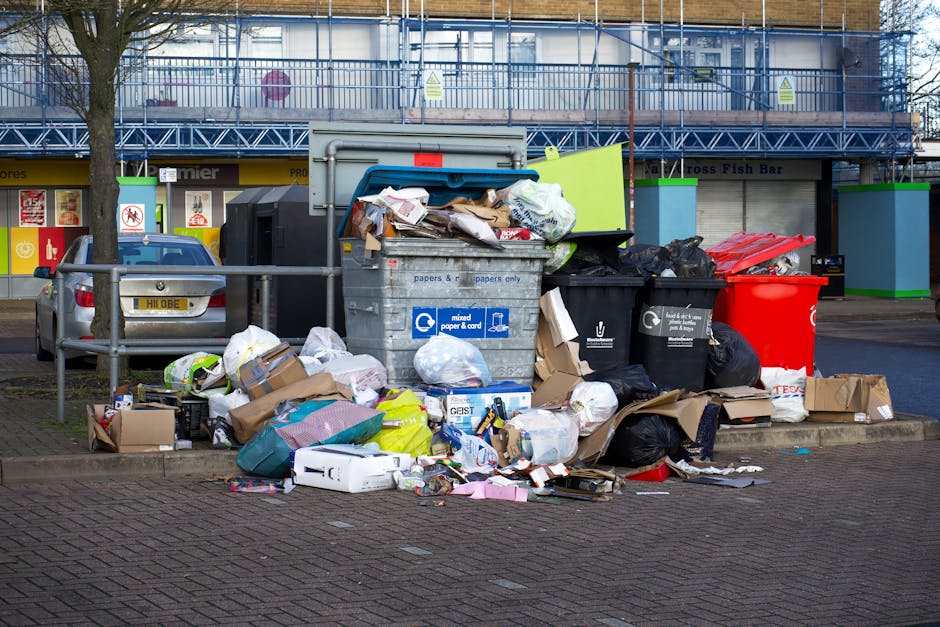
Commercial Waste Removal in Stratford for businesses that need reliable clearances

Commercial waste removal in Stratford should make it easier to keep trading spaces clear, organised and ready for normal use. Our service focuses on the collection and removal of business waste from premises that need a practical, straightforward solution for regular rubbish, one-off clear-outs and mixed commercial loads. We work across the kinds of jobs that arise in offices, shops, hospitality venues, managed buildings and light industrial settings, with an emphasis on sensible handling, tidy loading and lawful disposal.
We can help with general non-hazardous waste, bulky items, office contents, packaging, worn fixtures and other materials that can build up during day-to-day operations or a move. For many customers, the main value is having one team deal with the load from start to finish rather than trying to split it between staff, storage and separate disposal arrangements. Clear communication matters as much as lifting and loading, so we keep the process direct and easy to follow.
To compare service options or request a written figure, you can use the pricing and quotes page for more detail. If you already know the type of waste and the kind of access available, a short enquiry is usually enough to begin. Please note: the exact collection plan depends on the waste type, volume and site conditions.
Business waste collected from day-to-day operations
We handle the practical side of business waste removal for premises that generate a steady flow of rubbish and reusable or discardable items. That includes cardboard, packaging, shelving offcuts, shop-fitting residue, mixed office waste and other non-hazardous materials that are awkward to store or move internally. The aim is to reduce clutter without disrupting the way the premises are used, so the work is organised around access, loading space and the type of material present.
Where useful, we can clear a single location or arrange removal from several parts of the same site in one visit, provided the waste is ready for collection and the load can be described clearly. Businesses often choose this approach when they want a more flexible alternative to a skip or when the waste sits indoors, upstairs or behind restricted access. If you want to discuss a regular pattern or a one-off clearance, start with the waste type rather than the size of the building.
Supported collections are easier to plan when the customer can identify what is staying and what is leaving. A simple inventory, rough photographs or a list of awkward items can help shape the load, especially where there are mixed materials or repeated items from a refit. For a more detailed look at the service, see our business waste removal page.
Office clearances, desks and stored equipment

Office waste removal often involves more than just bags and bins. Desks, chairs, cabinets, filing items, monitors, broken peripherals and accumulated archive material can all need separating before they leave the building. We can remove individual items or fuller office loads where the space has been reorganised, vacated or refreshed. The work is planned so that usable access routes stay clear while items are taken away in a controlled way.
When equipment is being replaced, it is sensible to sort items that need special handling from those that can go in a general commercial load. Paper records, confidential paperwork and mixed office contents may need different preparation from furniture or packaging, so a clear description at the outset helps us choose the right approach. Customers who want more background on the service can look at office clearance as part of planning the job.
If a clearance includes filing cabinets, storage units or other heavy pieces, access details are helpful even before the visit is arranged. Stairways, lifts, loading bays and internal door widths all affect how the work is carried out, and a straightforward description can prevent delays on the day. A practical enquiry should cover what is in the room, what must stay and whether the site has any restrictions that affect loading.
Bulky items and furniture that need removal
Many commercial clearances include bulky furniture that cannot be left where it is. We remove items such as tables, desks, office chairs, reception seating, storage units and similar fittings that have reached the end of their current use. The service is useful after refurbishments, relocations or general fit-outs where old furniture is still occupying valuable floor space. It also suits premises that need a controlled clear-out without creating a pile of loose waste.
Furniture removal can be straightforward, but it still benefits from a sensible plan. Items may need to be separated into reusable, dismantled or general waste categories, and some pieces will require extra handling because of weight, shape or location. For customers who want a more specific furniture-focused option, the furniture clearance page gives a useful overview of that part of the service.
We also deal with broader commercial loads that include mixed furniture and other items from the same premises. That might involve a reception area, meeting room, back office or storage zone where several categories of waste are being removed together. If the collection includes both furniture and packaging, or furniture and obsolete equipment, it helps to mention that mix in the first enquiry so the removal can be matched to the load.
Builders’ waste and clearance after fit-out work

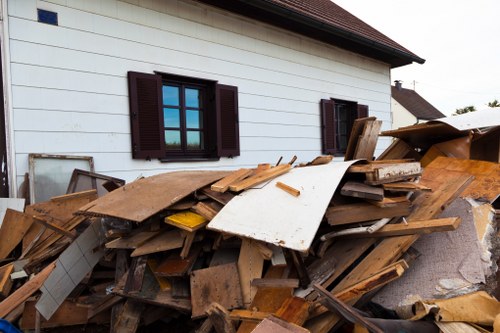
Commercial waste removal is often needed at the end of a fit-out, maintenance project or light refurbishment. Builders’ waste may include timber offcuts, boards, broken fittings, packaging, discarded fixtures and other non-hazardous debris left behind once the main work is finished. We focus on removing that material so the area can be handed back for cleaning, reinstatement or ordinary use without unnecessary delay.
This kind of clearance works best when the waste is described honestly and in enough detail to show what is present. Some jobs are mostly clean offcuts and packaging, while others contain heavier mixed debris from strip-out work. If the load includes items from a commercial refit, the builders’ waste clearance page is the most relevant place to read more about that service. It is also useful to note whether the waste is indoors, in a yard or spread across several levels.
Good preparation does not need to be complicated. A few photos, a short list of the main items and an indication of access are usually enough to help shape the collection. Where useful, please mention whether items are already grouped, whether loading is from the front, rear or inside the building, and whether the clearance needs to fit around other contractors or trading hours. That keeps the discussion focused on the actual removal.
Clearances for offices, storage rooms and mixed premises
Some sites need more than a single room emptied, especially where stock, paperwork, spare equipment and general waste have been stored in different corners over time. We can remove mixed commercial waste from offices, back rooms, storage areas and similar premises when the items are suitable for the service and described clearly in advance. The main objective is a neat, controlled clearance that leaves the area ready for the next stage of use.
When rooms contain a variety of waste, customers often find it useful to sort the load into simple groups before the collection. For example, paper, packaging, furniture, fixtures and general rubbish may all be present, but not every item needs separate treatment if they can be loaded together and handled as one commercial collection. For further information about broader premises clearances, see home clearance or house clearance only if the job is genuinely similar in scale and setup.
Not every clearance is suitable for the same method, so it is worth being clear about what is involved. If there are fragile items, confidential material, awkwardly stacked contents or narrow access routes, those details should be stated early. The more accurately the load is described, the easier it is to select an efficient approach and avoid removing the wrong items or arriving with an unsuitable plan.
About Stratford
Stratford in east London is a district shaped by transport, regeneration and a long industrial history. It lies within the London Borough of Newham and has become known for its role as a major focus of movement and redevelopment, especially around Stratford station and the wider Stratford City area. The station complex brings together rail, Underground, DLR and Elizabeth line services, making the district one of the most connected in east London. Nearby, the legacy of the 2012 London Olympics is still visible in Queen Elizabeth Olympic Park, a large public landscape that extends across former industrial land and includes waterways, athletics venues and open green space. The park gives the area a strong contemporary identity, but Stratford’s older character is still present in its streets, markets and Victorian and post-war building stock. The district also contains long-established shopping and commercial activity, most notably around The Mall and the Broadway, where retail, market trade and local services have developed over time alongside newer developments. Stratford’s growth has brought striking contrasts between older terraces, modern apartment blocks, office schemes and large mixed-use destinations. Cultural life is supported by venues such as Stratford Circus Arts Centre, while nearby West Ham Park adds another layer of open space to the locality. The Lea Valley corridor and connected waterways shape the wider landscape, giving the area a network of canals, green routes and industrial heritage that still influence its feel. In the wider urban pattern, Stratford sits at the meeting point of East London movement corridors, making it both a residential district and a commercial centre with a varied and evolving streetscape.
Hazardous items, confidential material and special handling
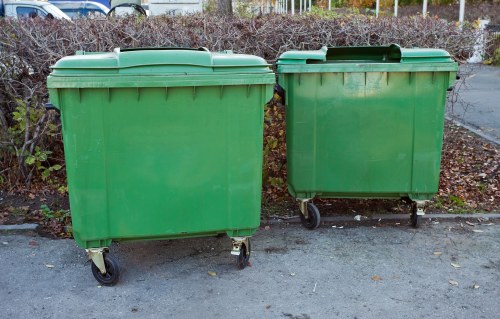
Some commercial waste cannot simply be mixed into a standard collection. Hazardous materials, confidential paperwork and certain specialist items require a more careful decision before any removal is arranged. We do not present every waste type as interchangeable, because the right method depends on what is being cleared and how it must be handled. Where a load contains anything sensitive or regulated, it is important to describe it plainly rather than assume it can be treated as general waste.
For documents and records, a separate destruction pathway may be more appropriate than ordinary disposal. Likewise, items such as appliances, certain fixtures or materials with specialist rules may need a different approach from general office rubbish. If you want to check whether a specific item belongs in this category, our confidential shredding and hazardous waste disposal pages give the clearest indication of those specialist subjects.
Because the correct handling method depends on the item itself, the safest starting point is a concise description of the load rather than a broad label like “miscellaneous wasteâ€. That helps avoid unsuitable collections and keeps the conversation focused on what can be removed lawfully. If there is any uncertainty, it is better to separate specialist material from general commercial rubbish before booking the work.
Kitchen, catering and appliance disposals for business premises
Commercial sites sometimes need awkward appliances removed as part of a clearance, refurbishment or equipment changeover. Fridges, freezers and similar units can be cumbersome to shift, particularly where they sit in break rooms, staff kitchens or back-of-house spaces. We can remove these items when they form part of a suitable commercial collection and when the removal can be described accurately in advance.
Appliances are not just bulky; they can also carry different expectations about drainage, electrical connections or the condition of the item. It helps to say whether a unit is freestanding, built in, switched off or already disconnected, because that affects how the load is prepared. For more on this subject, see fridge and appliance removal if that is the main part of the job.
Where a premises has several broken or outdated items together, it may be more efficient to clear them in one visit alongside general waste. That can include staff kitchen equipment, reception appliances or stockroom units that no longer need to remain on site. The important point is to describe the mixture clearly so the collection reflects the actual load rather than a guess about what might be present.
Pricing, site access and what affects the quotation
Commercial waste quotes usually depend on a few practical points rather than a fixed one-size-fits-all price. The main factors are the type of waste, the amount to be removed, how easy it is to reach, and whether any items need extra handling because of weight, location or separation. A collection from a ground-floor loading area is not the same as a clearance from a locked office, an upper level or a site with limited parking.
It also helps to know whether the waste is already gathered or still spread across several rooms. A well-prepared load is simpler to assess than a collection that needs sorting on arrival, and that difference can affect the plan. If you are ready to ask for a figure, the pricing and quotes page remains the best starting point for a straightforward enquiry about the job.
For the quickest response, give a short description of the premises, the main items to be removed and any access issues that could affect loading. Two or three photographs can be useful, but a clear written summary is just as important. One clear message with the basics usually gives a better starting point than a long list of incomplete notes. If you are ready, request a quotation now and we will help you plan the removal.