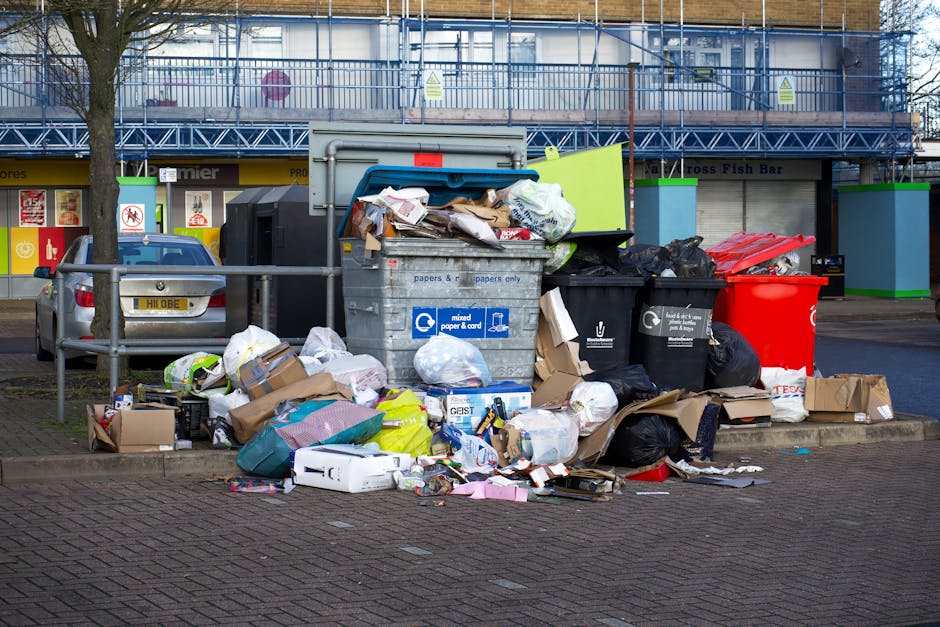
What to know about narrow access rubbish collections in Stratford
If you live or work in Stratford, you already know how quickly a simple rubbish job can become awkward. Tight stairwells, basement flats, shared entrances, rear mews access, blocked pavements, awkward loading bays, parked cars, and those lovely little "one wheel will fit, two won't" moments - it all adds up. What to know about narrow access rubbish collections in Stratford is really about one thing: making waste removal possible without damaging the property, upsetting neighbours, or turning a straightforward clearance into a day-long headache.
This guide explains how narrow access collections work, who they suit, what to check before booking, and where people often go wrong. If you're clearing a flat, dealing with bulky furniture, handling builders' debris, or just trying to get a pile of waste out without a fuss, you'll find the practical bits here. And yes, a bit of planning saves a lot of back-and-forth later. Funny how that always happens.
Table of Contents
- Why narrow access rubbish collections in Stratford matter
- How narrow access collections work
- Key benefits and practical advantages
- Who this is for and when it makes sense
- Step-by-step guidance
- Expert tips for better results
- Common mistakes to avoid
- Tools, resources and recommendations
- Law, compliance, standards, and best practice
- Options, methods, or comparison table
- Case study or real-world example
- Practical checklist
- Conclusion
- Frequently asked questions
Why narrow access rubbish collections in Stratford matter
Stratford is busy, built-up, and full of properties that look simple from the street but are less simple once you try to move a sofa, fridge, or a few builders' bags through them. Narrow access can mean many things in practice: tight hallways, steep stairs, long walks from the vehicle, limited parking, low door frames, shared courtyards, or access only through a side gate. None of that is unusual. It just changes how rubbish needs to be collected.
The difference between a smooth collection and a stressful one is often access planning. If the team knows in advance that they may need to carry items through a narrow passage or down three flights of stairs, they can bring the right crew, protect surfaces, and allow enough time. If not, the job can slow down, or extra charges may appear. Not ideal. To be fair, most people only realise this after the first awkward attempt with a wardrobe.
This matters even more in Stratford because local properties vary so much. You may be dealing with modern apartments, older terraces, converted buildings, or commercial spaces tucked behind busy roads. Each has its own quirks. Narrow access collections are designed to handle those quirks safely, rather than forcing a one-size-fits-all approach.
Expert summary: narrow access rubbish removal is less about "special treatment" and more about sensible planning. The better the access details, the cleaner the job, the lower the risk, and the less likely you are to have delays on the day.
How narrow access collections work
At a practical level, narrow access rubbish collection is a planned waste removal service adapted for difficult entry points. Instead of assuming waste can be taken straight from curb to truck, the team may need to carry items piece by piece from inside a property, down stairs, through shared spaces, or across a longer route to the vehicle.
The process usually starts with a description or photos. A good provider will want to know what needs removing, how large or heavy it is, where it sits in the property, and what the access is like. Sometimes a quick call is enough. Other times, photos from a phone make life much easier. You can show the stair width, door clearances, parking constraints, and anything that might trip the job up. That bit of honesty up front is worth its weight in old wardrobes.
Once the access is understood, the job is usually planned around manpower and vehicle size. For narrow hallways and upper-floor flats, more crew may be needed. For very restricted access, the team may use smaller carrying equipment, protective coverings, or a staged loading approach. In some cases, collections are split into multiple trips. Not glamorous, but effective.
For jobs involving mixed waste, bulky household items, or a full property clear-out, the access plan becomes part of the removal plan. That is why services such as flat clearance, house clearance, and waste removal are often discussed together. Access affects all of them.
You may also notice that not every collection needs the same method. A few bags from a first-floor flat and a dismantled wardrobe from a narrow basement entrance are both "small" jobs on paper. In real life, they are not the same thing at all.
Key benefits and practical advantages
Narrow access rubbish collections are about more than squeezing items through a tight gap. When they are handled properly, they make life easier in several ways.
- Less disruption: The collection is planned around the property instead of forcing the property to fit the collection.
- Reduced damage risk: Walls, bannisters, floors, and door frames are less likely to get scuffed or knocked.
- Better time control: With access details in advance, the crew can work more efficiently and avoid unnecessary delays.
- Safer lifting: Heavy or awkward items are easier to move when the team knows the route in and out.
- More accurate quotes: Clear access information helps reduce surprises on the day.
There is also a psychological benefit, which people do not always mention. Once you know the access issue has been thought through, the whole job feels less stressful. That matters, especially if you are already in the middle of a move, a renovation, or a tenant handover. Stress piles up fast in those situations.
For business premises, narrow access planning can protect trading hours too. A back entrance with limited width, a service corridor, or a stairwell in an office building can all slow a collection if no one has prepared. Services such as office clearance and business waste removal often rely on good access planning to keep disruption down.
Who this is for and when it makes sense
Narrow access rubbish collection makes sense whenever the waste cannot be lifted directly from the front door to the vehicle without some thought. That sounds obvious, but in practice it covers a lot of situations.
You may need it if you live in a flat above ground level, have a basement storage area, share an entrance with neighbours, or have a courtyard only reachable through a slim passage. It is also useful for landlords dealing with end-of-tenancy clearances, shop owners in busy Stratford locations, or homeowners clearing lofts and garages with awkward stair access. A tight loft hatch can turn a "quick tidy" into a proper logistical puzzle. Anyone who has tried to rotate a dusty armchair in a narrow stairwell knows the feeling.
It is especially sensible when the items are bulky, fragile, or heavy. Think wardrobes, mattresses, sofas, white goods, or mixed household clutter. Services like mattress and sofa disposal, furniture disposal, and fridge and appliance removal are all easier when the access route is understood in advance.
If you are unsure whether narrow access applies to your job, a good rule is simple: if you need to say "it's a bit awkward in there," then it probably does. Truth be told, that phrase covers a lot.
Step-by-step guidance
The smoother collections tend to follow the same basic pattern. Here is the simple version.
- List what needs to go. Separate general rubbish, bulky items, recyclables, and anything that might need special handling.
- Measure the tricky points. Doorways, hallways, stair widths, low ceilings, and turns matter more than people expect.
- Take clear photos. A few phone pictures often save time and avoid misunderstandings. Show the route, not just the waste pile.
- Explain parking and loading access. Can a van stop outside? Is there a permit area, loading bay, or restricted road?
- Check for restrictions. Some waste types need extra care. If there is hazardous material, separate it out before collection.
- Book the right type of service. A flat clearance, builder's waste job, or general waste removal may suit different access conditions.
- Prepare the route. Move small items, unlock gates, and let neighbours know if shared access is involved.
- Be present, if possible. Being there helps answer quick questions and prevents unnecessary delays.
One useful habit is to walk the route yourself before the collection. Do it slowly. Notice where your shoulder brushes a wall, where the turn gets tight, where the light is poor, and where an item might catch. That's usually where the problems live.
If the job involves sorting, dismantling, or mixed materials, services like builders waste clearance, garage clearance, or loft clearance can be especially useful because they are built around a wider range of access challenges.
Expert tips for better results
Here is where a bit of experience makes a real difference.
First, photograph the narrowest point, not just the waste. A picture of the pile is helpful, sure, but the door frame, staircase, and route to the street tell the real story.
Second, dismantle what you safely can. A wardrobe that becomes three panels is far easier to move than one solid lump. The same goes for bed frames, desks, and some shelving. If you are not confident doing this, do not force it. A wobbly screwdriver job can become a safety issue fast.
Third, protect the obvious pinch points. Corners, banisters, and lower wall sections often get knocked first. Simple coverings or careful routing help more than people think.
Fourth, allow extra time around busy Stratford streets. Loading may be affected by parked cars, pedestrians, and general traffic flow. A collection that looks simple at 8am can feel very different at school-run time or during the evening rush.
Fifth, separate special waste in advance. If you have items that need specialist handling, such as chemicals, certain electricals, or contamination concerns, flag them early. A separate route, separate treatment, or separate disposal stream may be needed depending on the material.
Sixth, ask how the crew plans to handle the building. That may sound like a small thing, but it tells you a lot. A provider who asks sensible questions about access is usually the one you want. The ones who ask almost nothing... less so.
If you are comparing broader clearance options, it can help to look at related services such as home clearance or furniture clearance to match the job to the access conditions rather than guessing.
Common mistakes to avoid
Narrow access jobs go wrong for fairly predictable reasons. The good news is that most of them are easy to avoid.
- Under-describing the access: "It's fine" is not enough if the stairwell is tight or the route is long.
- Forgetting parking limits: If the van cannot get close enough, the job takes longer and may cost more.
- Leaving items intact when they should be dismantled: Some bulky items simply do not clear narrow turns as one piece.
- Ignoring shared spaces: Communal halls, lifts, and neighbour access need a bit of care.
- Mixing waste types: General rubbish, bulky furniture, and specialist waste may not all be handled the same way.
- Not asking about insurance and safety measures: A reputable provider should be able to explain how they reduce the risk of damage or injury.
Another common issue is assuming the cheapest quote is the best quote. Sometimes it is. Often it is missing the awkward part. And that awkward part is exactly what narrow access jobs are made of. Saving a little upfront only to face extra charges later is not exactly a bargain.
If you want to reduce that risk, read about how to compare quotes carefully in the article on avoiding hidden charges in Stratford rubbish removal quotes. It is a useful companion piece for anyone booking a collection with tight access.
Tools, resources and recommendations
You do not need specialist kit for every collection, but a few practical tools and habits make things much easier.
| Tool or resource | Why it helps | Best used for |
|---|---|---|
| Phone photos | Show the route, the waste, and the tight points clearly | Quote accuracy and job planning |
| Measuring tape | Confirms door widths, stair turns, and item dimensions | Bulky items and tight staircases |
| Protective covers or blankets | Helps reduce scuffs on walls and furniture | Shared halls and tight corridors |
| Labels or simple sorting bags | Makes sorting quicker on the day | Mixed household or office waste |
| Clear access notes | Helps the crew prepare the right equipment and team size | Any narrow access job |
If the job also involves unwanted furniture, large appliances, or a roomful of clutter, it can help to compare the relevant disposal route first. For example, mattress and sofa disposal is not the same as appliance removal, and both differ from a broader house or flat clearance.
For people who want a simple booking route, an online booking option can be useful, especially when you already know the access is awkward and you want to write everything down carefully. You can also review service information such as pricing and quotes and about us to understand how a provider presents its work and standards.
Law, compliance, standards, and best practice
Waste removal in the UK comes with a few responsibilities, even when the job looks simple. You do not need to become a compliance expert overnight, but it helps to know the broad picture.
First, waste should be handled by a legitimate operator. If you are hiring someone to remove rubbish from a home, flat, office, or shop, it is sensible to ask how they manage transport, disposal, recycling, and documentation where relevant. For business waste especially, proper handling matters. A decent provider should be able to explain their approach without making it feel mysterious.
Second, access planning is part of safety. Narrow corridors, stairs, and shared entrances increase the chance of slips, trips, and knocks. Good practice includes working slowly where needed, using enough staff for heavier items, and avoiding lifting that clearly should be shared. A rushed lift is how little accidents happen. Annoying, and entirely preventable.
Third, some items need extra care. That includes certain electrical items, sharp materials, contaminated waste, and anything you would reasonably describe as hazardous. If in doubt, separate it and ask before collection. For jobs involving riskier waste streams, a page like hazardous waste disposal may be relevant to review before booking.
Fourth, protect the property. While not every provider will say it the same way, best practice usually means minimising damage to walls, floors, and communal areas, especially in narrow access settings. This is one reason insurance and safety policies matter. You can look at a company's insurance and safety information and its health and safety policy if you want reassurance before booking.
Finally, if privacy-sensitive waste is involved - old paperwork, boxes of files, office archives - the collection method should reflect that. Sometimes shredding or secure disposal is the better option. That is where a service like confidential shredding can matter more than people expect.
Options, methods, or comparison table
Not every narrow access situation needs the same type of collection. The right choice depends on volume, item type, building layout, and how awkward the access really is. Sometimes a full clearance is best. Sometimes a targeted bulky-item pickup is enough.
| Option | Best for | Main advantage | Potential drawback |
|---|---|---|---|
| Single bulky-item collection | One or two large items like a sofa, fridge, or mattress | Quick and straightforward | Not ideal for bigger clearances |
| Flat clearance | Flats with mixed waste, furniture, and clutter | Good for awkward internal access | May need more planning if parking is tight |
| House clearance | Whole-home decluttering or move-out jobs | Efficient for larger volumes | Can take longer in narrow properties |
| Builders waste clearance | Renovation debris, packaging, and mixed construction waste | Useful when access is tight but the waste is heavy | Access and weight planning matter a lot |
| Garage or loft clearance | Stored clutter, old household items, and awkward carry routes | Targets hard-to-reach spaces | Usually needs a good on-site assessment |
In many Stratford jobs, the decision is less about "which service sounds best?" and more about "which service matches the building and the waste?". That small difference saves a lot of hassle.
Case study or real-world example
Here is a realistic example based on the kind of job people often face, without dressing it up too much.
A resident in a Stratford flat needs to clear a sofa, a mattress, two bookcases, and several bags of general clutter. The flat is on the second floor, the stairwell is narrow, and there is no lift. Parking outside is limited in the afternoon, and the building has a shared entrance used by several neighbours.
On paper, it looks like a standard domestic clearance. In practice, the access changes everything. The successful version of this job would usually involve sending photos in advance, confirming the stair width, checking whether the bookcases can be dismantled, and agreeing a time when parking is easiest. The crew would protect the main route, move carefully through the shared hall, and load items in stages if needed.
The point is not that the job is unusual. It is that the access details decide the outcome. Without that planning, the crew might arrive with the wrong setup, the collection could take longer, and the resident might feel rushed or cornered. With planning, the whole thing becomes manageable. Still a faff, perhaps. But a controlled faff.
That same approach works for office, retail, and rental property clearances too. A shop near Stratford with limited back access may need a very different loading plan from a house on a quieter road. Access is the hidden variable, and it is often the one that matters most.
Practical checklist
Use this checklist before you book a narrow access collection in Stratford.
- List everything that needs to be removed.
- Measure doorways, stair widths, turns, and any low ceilings.
- Take photos of the access route and the waste.
- Note whether the property has lifts, shared halls, or restricted entry.
- Check where a vehicle can park or stop safely.
- Separate hazardous, confidential, or specialist waste.
- Decide whether items should be dismantled first.
- Clear small obstacles from the route.
- Tell neighbours or building management if shared spaces are involved.
- Ask about insurance, safety, and how damage prevention is handled.
- Confirm the collection window and whether someone needs to be present.
- Ask for a clear quote that reflects the access conditions.
If you can tick most of those boxes, you are already ahead of the game. And honestly, that usually means the collection day feels much calmer.
Get a free quote today and see how much you can save.
Conclusion
What to know about narrow access rubbish collections in Stratford comes down to planning, honesty, and choosing the right removal method for the property. Tight access does not have to mean a difficult collection, but it does mean the details matter more than usual. Measure the route, send photos, explain the parking, and make sure the service matches the space.
When that happens, the job is safer, smoother, and usually more cost-effective too. Whether you are clearing a flat, shifting bulky furniture, emptying a loft, or dealing with mixed household waste, the right approach can save time and take a lot of stress out of the day. Small preparation, big difference. That's the truth of it.
And if your property feels awkward, cramped, or just a bit of a puzzle, don't worry - it's a very normal kind of puzzle. The right collection plan can make even the tightest job feel manageable, and that is a relief worth having.
Frequently Asked Questions
What counts as narrow access for a rubbish collection?
Narrow access usually means any route that makes moving waste difficult or slower than normal. That can include tight stairwells, small door frames, long walks from the property to the vehicle, shared hallways, basement entrances, or restricted loading space outside.
Do I need to measure the doorway or staircase before booking?
It helps a lot, yes. Even rough measurements are useful. Door width, stair turns, and low ceilings can affect whether large items need dismantling or a bigger team. A few numbers now can save a lot of awkwardness later.
Can narrow access collections handle bulky furniture?
Usually, yes. Sofas, wardrobes, beds, and tables are commonly removed from tight properties, but the route matters. Some items may need to be dismantled first, and the team may need extra care to protect walls and floors.
Is narrow access rubbish removal more expensive?
It can be, because it may take more time or staff to complete safely. That said, the exact cost depends on the waste type, volume, parking access, and how awkward the route is. Clear information usually leads to a clearer quote.
What photos should I send before the collection?
Send photos of the waste itself and the full route out of the property if possible. Include stairs, hallways, doors, gates, and any parking restrictions. The best photos are the ones that show the tricky bit, not just the neat pile of rubbish.
What if the waste is in a loft or basement?
That is common enough, and it is exactly where access planning helps. Loft hatches, steep stairs, and basement steps can slow the work down, so it is sensible to mention them early and check whether items can be safely moved in sections.
Can I book narrow access collection for a rental property or end-of-tenancy clear-out?
Yes, and it is often a good idea. End-of-tenancy jobs frequently involve mixed waste, furniture, and a limited timeframe. Narrow access planning helps the job happen cleanly, which is useful when there is a handover deadline looming.
Do I need to be present during the collection?
Not always, but it is often helpful. Being there means you can answer quick questions about access, decide on the spot if an item should be removed, and avoid delays if the crew finds an unexpected issue.
What happens if the crew cannot fit a large item through the route?
In most cases, the item may need to be dismantled, carried through a different route, or treated as a separate job. That is why it is so important to explain the access conditions before the collection day rather than after the van has arrived.
Are there items that need special handling in narrow access jobs?
Yes. Hazardous materials, certain electrical items, sharp waste, and confidential paperwork can all need extra care. If you are unsure, separate the item and ask in advance. It is always better to pause and check than guess and regret it later.
How do I avoid hidden charges on a narrow access job?
Be clear about access, photos, parking, waste type, and any likely obstacles. Ask what could change the quote on the day. A transparent provider should explain that before you book. If you want extra guidance, the article on hidden charges in Stratford rubbish removal quotes is a good place to start.
Is narrow access rubbish collection suitable for businesses as well as homes?
Absolutely. Shops, offices, clinics, and workshops all deal with awkward access from time to time. Back entrances, service corridors, shared loading areas, and upper-floor storage can make business waste removal just as tricky as a flat clearance.